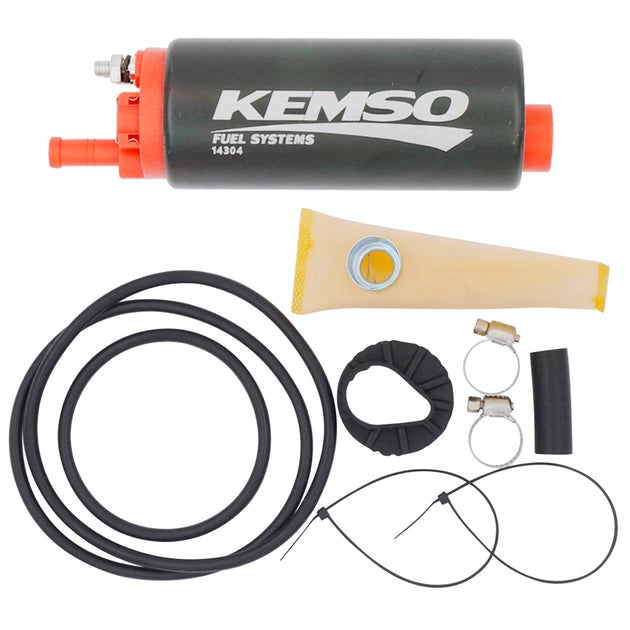
 The balance of cost-effectiveness further reveals the huge market differentiation. The unit price of the basic electromagnetic fuel pump may only be 15 to 30 US dollars. The factory price of the mainstream replacement parts is about 20 to 50 US dollars, and the labor cost for replacement is about 60 US dollars. However, the unit price of the high-precision electronic Fuel Pump in the OEM market (such as Bosch 044) can reach 150 to 300 US dollars. As for the racing or modification market, The price of high-flow racing pumps even exceeds 500 US dollars each. Data from the Chevrolet Cruze owner forum shows that the two-year failure rate of non-original low-cost oil pumps has reached 22%, which is much higher than the 5% level of original pumps, resulting in cumulative maintenance costs that exceed those of original parts by 30%. The industrial field pays more attention to the full life cycle cost: Although the single unit cost of high-pressure common rail pumps used in mines exceeds $1,000, the total holding cost is reduced by more than 25% compared to cheaper alternatives due to the reduction in downtime losses (with downtime losses exceeding $1,000 per hour) and a 3-5% improvement in fuel efficiency (saving $1,500-2,500 based on an annual consumption of 50,000 liters). The investment payback period is generally shorter than 12 months.
Data and real cases clearly prove that from Fuel adaptability to output pressure, from tolerance to extreme environments to cost efficiency, the Fuel Pump of modern internal combustion systems is the result of a highly complex engineering compromise, by no means a simple unity on the specification sheet. Understanding the weights and backgrounds of these parameters is the core prerequisite for ensuring the reliability and economy of the system.
The balance of cost-effectiveness further reveals the huge market differentiation. The unit price of the basic electromagnetic fuel pump may only be 15 to 30 US dollars. The factory price of the mainstream replacement parts is about 20 to 50 US dollars, and the labor cost for replacement is about 60 US dollars. However, the unit price of the high-precision electronic Fuel Pump in the OEM market (such as Bosch 044) can reach 150 to 300 US dollars. As for the racing or modification market, The price of high-flow racing pumps even exceeds 500 US dollars each. Data from the Chevrolet Cruze owner forum shows that the two-year failure rate of non-original low-cost oil pumps has reached 22%, which is much higher than the 5% level of original pumps, resulting in cumulative maintenance costs that exceed those of original parts by 30%. The industrial field pays more attention to the full life cycle cost: Although the single unit cost of high-pressure common rail pumps used in mines exceeds $1,000, the total holding cost is reduced by more than 25% compared to cheaper alternatives due to the reduction in downtime losses (with downtime losses exceeding $1,000 per hour) and a 3-5% improvement in fuel efficiency (saving $1,500-2,500 based on an annual consumption of 50,000 liters). The investment payback period is generally shorter than 12 months.
Data and real cases clearly prove that from Fuel adaptability to output pressure, from tolerance to extreme environments to cost efficiency, the Fuel Pump of modern internal combustion systems is the result of a highly complex engineering compromise, by no means a simple unity on the specification sheet. Understanding the weights and backgrounds of these parameters is the core prerequisite for ensuring the reliability and economy of the system.
Are all fuel pumps created equal?
Are all fuel pumps born equal? The answer to this question is a resounding "No". The core difference of Fuel pumps that drive different vehicles or equipment lies in the chemical properties of the fuel they deal with. Gasoline pumps (such as some Bosch high-pressure direct injection pumps) use special alloys and precision seals to withstand working pressures up to 20 MPa and the strong solvent corrosion of gasoline. The replacement cycle of their seals is usually around 80,000 to 100,000 kilometers. Diesel pumps (such as Delphi's electronically controlled monomer pumps), on the other hand, need to resist an additional viscosity ten times that of gasoline (diesel viscosity at 0°C is approximately 4-6 mm²/s, while gasoline viscosity is only about 0.4-0.6 mm²/s) and an injection peak pressure as high as 200 MPa. The control accuracy of the plunger pair clearance reaches the micrometer level. The error accuracy should be within ± 0.001mm to ensure atomization efficiency; otherwise, fuel consumption may increase by 3% to 5%. As for liquefied petroleum gas (LPG) pumps, special polyetheretherketone valve plates need to be designed for their low lubrication characteristics to avoid premature failure caused by dry friction. The wear rate can be reduced by more than 70% compared with traditional materials.
The differences in performance parameters and service life constitute another significant dimension. The rated flow rate of a gasoline pump for ordinary passenger vehicles is usually between 80 and 150 liters per hour, the noise level is controlled below 45 decibels, and the designed average mean time between failures is approximately 100,000 kilometers or 5 years. The enhanced gasoline pumps corresponding to high-performance turbocharged engines (such as Walbro GSS342) can have a peak flow rate of more than 300 liters per hour and can continuously withstand 100% load operation to meet the fuel supply demand of more than 500 horsepower. The application in the industrial field is even more demanding: The mechanical rotor pump of Caterpillar's large mining diesel engine has a design life requirement of over 100,000 working hours, and the flow accuracy must be guaranteed within ±1% to avoid the combustion fluctuation in the cylinder from exceeding the limit. Cummins' report released in 2019 pointed out that its new generation of high-pressure common rail pumps adopted ceramic-coated plungers, which increased the anti-wear life by 40%, significantly reduced the frequency of equipment maintenance, and lowered the total life cycle maintenance cost by approximately 15%.
The complexity of the application scenarios directly determines the type and technical specifications of the pump. Compact urban commuter vehicles often adopt electric turbine fuel pumps integrated in the fuel tank, weighing as little as 0.8 kilograms, with costs controlled within the range of 20 to 50 US dollars, and have a compact structure to adapt to the layout of narrow Spaces. Heavy commercial vehicles rely on large mechanical plunger pumps or electronically controlled high-pressure common rail pump systems to meet their huge fuel demands (the peak fuel consumption of large diesel engines can reach 100 liters per 100 kilometers), and their volume is often more than five times that of family cars. Historically, there have been frequent malfunctions caused by specification mismatches: In 2018, some Volkswagen EA888 engine models were recalled over 120,000 units due to insufficient flow from the secondary low-pressure oil pump, which led to cavitation in the high-pressure pump under high load. In addition, the requirements for low-temperature cold start performance vary greatly: Special oil pumps suitable for extremely cold regions (such as the fuel preheating system of Russian Lada Niva) must ensure a 95% start success rate at an ambient temperature of minus 45°C, and the power consumption of the preheating device is as high as 150 watts, far exceeding the design of ordinary pumps.
The balance of cost-effectiveness further reveals the huge market differentiation. The unit price of the basic electromagnetic fuel pump may only be 15 to 30 US dollars. The factory price of the mainstream replacement parts is about 20 to 50 US dollars, and the labor cost for replacement is about 60 US dollars. However, the unit price of the high-precision electronic Fuel Pump in the OEM market (such as Bosch 044) can reach 150 to 300 US dollars. As for the racing or modification market, The price of high-flow racing pumps even exceeds 500 US dollars each. Data from the Chevrolet Cruze owner forum shows that the two-year failure rate of non-original low-cost oil pumps has reached 22%, which is much higher than the 5% level of original pumps, resulting in cumulative maintenance costs that exceed those of original parts by 30%. The industrial field pays more attention to the full life cycle cost: Although the single unit cost of high-pressure common rail pumps used in mines exceeds $1,000, the total holding cost is reduced by more than 25% compared to cheaper alternatives due to the reduction in downtime losses (with downtime losses exceeding $1,000 per hour) and a 3-5% improvement in fuel efficiency (saving $1,500-2,500 based on an annual consumption of 50,000 liters). The investment payback period is generally shorter than 12 months.
Data and real cases clearly prove that from Fuel adaptability to output pressure, from tolerance to extreme environments to cost efficiency, the Fuel Pump of modern internal combustion systems is the result of a highly complex engineering compromise, by no means a simple unity on the specification sheet. Understanding the weights and backgrounds of these parameters is the core prerequisite for ensuring the reliability and economy of the system.
The balance of cost-effectiveness further reveals the huge market differentiation. The unit price of the basic electromagnetic fuel pump may only be 15 to 30 US dollars. The factory price of the mainstream replacement parts is about 20 to 50 US dollars, and the labor cost for replacement is about 60 US dollars. However, the unit price of the high-precision electronic Fuel Pump in the OEM market (such as Bosch 044) can reach 150 to 300 US dollars. As for the racing or modification market, The price of high-flow racing pumps even exceeds 500 US dollars each. Data from the Chevrolet Cruze owner forum shows that the two-year failure rate of non-original low-cost oil pumps has reached 22%, which is much higher than the 5% level of original pumps, resulting in cumulative maintenance costs that exceed those of original parts by 30%. The industrial field pays more attention to the full life cycle cost: Although the single unit cost of high-pressure common rail pumps used in mines exceeds $1,000, the total holding cost is reduced by more than 25% compared to cheaper alternatives due to the reduction in downtime losses (with downtime losses exceeding $1,000 per hour) and a 3-5% improvement in fuel efficiency (saving $1,500-2,500 based on an annual consumption of 50,000 liters). The investment payback period is generally shorter than 12 months.
Data and real cases clearly prove that from Fuel adaptability to output pressure, from tolerance to extreme environments to cost efficiency, the Fuel Pump of modern internal combustion systems is the result of a highly complex engineering compromise, by no means a simple unity on the specification sheet. Understanding the weights and backgrounds of these parameters is the core prerequisite for ensuring the reliability and economy of the system.